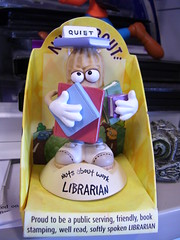
I'm not fond of all these different registerings we have to do to get into the various new, electronic conveniences / improvements.
Like many have stated before, I like the Google search group creator better than the Rollyo. Google still has ads, though unless (I guess) you claim to be a government, school or non-profit. As an individual, I am none of those things.
In Rollyo, I used the public domain ebook search engine and tried "Chaucer." It turned up a number of interesting and useful links, including things about C. as well as by C. However the item that really had my bloodpressure meds doing its job was an ad link to "The Nation's Oldest and Largest Term Paper and Thesis Source. / Over 55,000 of the latest Topics and Reports On File. / xxxxxxxx Papers has been providing high quality research reports for over 32 years. / Reproduction of existing reports or termpaper at $6.00 per page. / Custom Research starting at $16.00 per page." Admittedly, one could just do a search for term papers on Google, but I resent having a cheat site turn up in a "ebook public domain" search.
Some of the other ads are the same ridiculous type that you see on a normal Google search--"Find Chaucer for sale on Ebay," or "Chaucer / Millions of products from thousands of stores all in one place. / www. ... /homefurnishings.com". Oh yeah, I'd be interested in Chaucer home furnishings! I find that kind of customization (to quote from Perry Mason [t.v. show]) "incompetent, irrelevant, and immaterial."
 #19. From the tablets of Ebla and the books of Alexandria to now, shouldn't we be on at least Library 8.5 or something?
(Stepping toward the Future!)
Library 2.o
Reaction to ''just in case'' collection development as an "iceberg" to steer away from.
Weeding is not my favorite activity. I understand its necessity, I understand the goal(s), and I do my professional best to follow the policies in place. But the step farther advocated in moving to digital collections away from warehousing of specific items is a step too far. Libraries need both. As another 27things blogger has noted, a library with digital content licenses as opposed to physical items owned is at the mercy of the content providers even after it has paid for the information.
You may have noticed even "warehousing" (my usage, not the article's) is a connotatively negative term in this discussion. What positive term does libraryland have for owning physical resources? I'm fairly certain that the words we use to describe and label things matters greatly in our and others' emotional and intellectual reaction to the debates concerning those things.
One of the things I've noticed, for example, is that although the library system has copies of a book at different branches, if a copy isn't at a particular branch when the patron is there, putting the title on hold and having it delivered doesn't feel like the instant satisfaction the patron had hoped for / expected. And in someways, a digital collection might solve that problem because if the system had a licensed copy of the content available, the patron could access it from whatever building or even from home.
Nevertheless, given that public libraries haven't yet for the most part formed their own digital content creation cooperatives, it leaves the control and the pricing in the hands of the [digital] publishers. I don't trust their altruism.
But what am I thinking? Libraries (to say, users of all stripes) don't control the creation nor pricing of gasoline, it's in the hands of the gasoline "publishers" and that works fine, doesn't it?